
Benchmarking – The First Step Towards Cost Saving Efficiency
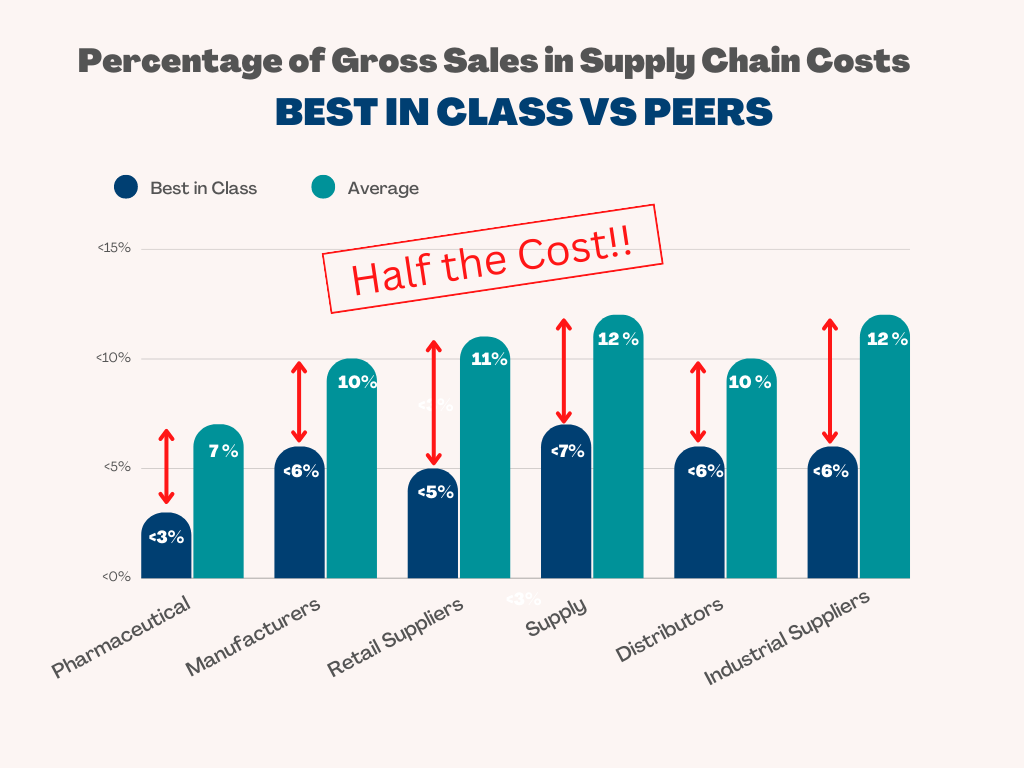
Supply chains providing best-in-class service do it at half the cost of their peers.
To find out how Benchmarking can make your Supply Chain more efficient, talk to a Benchmarking Consultant today.
Where You’ve Seen Us















Benchmarking Lessons from Sports
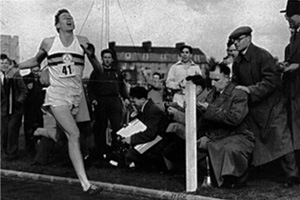
Running a mile in less than four minutes was considered impossible.
Then Roger Bannister did it in April 1954.
And in the next 18 months his record was broken 12 times!
A new benchmark had been set and expectations and performance increased accordingly.
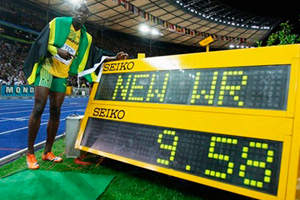
Usain Bolt is the world’s fastest man.
He is the benchmark.
If you want to beat his time, first, you have to know what it is. It’s 9.58 seconds.
If you want your supply chain being the best, first, you need to know what the benchmark for your industry is.
Johnny Weismuller WAS the world’s fastest man.
An olympian and a movie star, Johnny Weismuller setthe benchmark in the pool.
He held 69 world records and at one time held EVERY world record from 50 yards to 1 mile.
But nowadays his world record times are bested by 13 year olds because the benchmark is a moving goalpost!
That’s why it’s essential to re-benchmark against the marketplace to understand what the new best is on a regular basis.

The Difference in Costs is Huge!
To find out how Benchmarking can make your Supply Chain more efficient, talk to a Benchmarking Consultant today.
Benchmarking – The Most Popular Management Tool*
The 2009 report demonstrated that the most popular management tool was benchmarking.
The survey, conducted in January 2009 encompassed 1,430 international executives from companies from a broad range of industries and focuses on 25 tools that are available to executives.
Benchmarking overtook strategic planning to top the tool usage list because benchmarking was seen as a priority in achieving cost savings in the business while improving service simultaneously.
One executive observed that for benchmarking to be most effective, his company has to dig deeper.
“I’d like to see more granular, actionable benchmarking in the future. That way if we’re not doing well compared to our competitors, it’s a red flag to address a problem.”
* Source: Bain & Company, Management Tools & Trends 2009
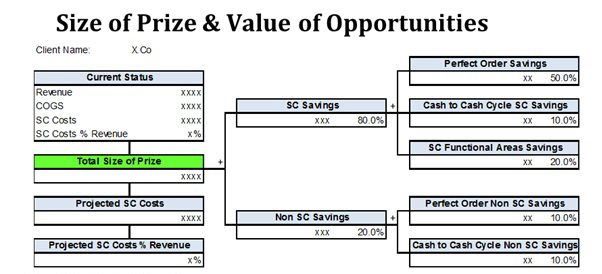
Size of the Prize
Cost savings become possible when performance is improved by 1 or 2 decile ranks in key supply chain cost driving areas, such as:
- Perfect order
- Cash to cash cycle
- Supply chain functional cost silos.
The calculation logic of the Size of Prize is based on the following:
- Using key areas of supply chain cost silos, perfect order and cash to cash cycle.
- Positioning of the company under review as “decile” placing for each of these key areas (i.e. decile 10 = top 10%, decile 1 = bottom 10%)
- Calculate the savings if company improves by 1 decile ranking for each of the key areas.
- Also calculate savings for improving 2 deciles.
- Calculating both the direct SC and indirect SC savings.
- A sample is set out below using the Plumbing Chart approach
How is Performance Measured?
You can’t Improve What You Do Not Measure!
BMS’s approach to improving service through benchmark measurement of both service and cost performance is to apply a series of in depth KPIs.
In essence, benchmarking involves carrying out a super-audit of a company’s end-to-end supply chain from supplier to customer delivery.
Categories should include at least some of the following:
- Procurement
- Overview of supply chain management
- Management of inventory
- Manufacturing contribution to supply chain
- Distribution centre/warehouse management.
- Transportation – inbound and outbound.
- Customer service
- Supply chain costs
Identifying KPIs
Essential KPIs to be measured include some or all of the following, depending on the industry:
- Delivery in full. This measures the percentage of orders that were delivered in full over a given time period.
- Delivery on time. This KPI measures inbound deliveries or those you make to your customers to determine the percentage of sales or purchase orders that are made on time.
- Delivery in full and on time (DIFOT). This KPI is calculated by dividing the number of orders delivered in full and on time by the total number of orders delivered in a given time period.
- Supply chain cost as a percentage of sales. If, for example, your company concludes sales worth $2 million with supply chain costs totalling $200,000, supply chain management cost as a percentage of sales would be 10%.
- Cash-to-cash cycle time. This KPI measures the average elapsed time from when your company pays for raw materials or finished goods to when the end customer makes payment.
- Stock turns. This KPI calculates the rate at which your inventory is consumed. It is measured by dividing the cash value of inventory consumed in a year by the cash value of inventory usually held in your warehouses.
Get a Clear Picture
The results are then compared, or benchmarked, against the data of businesses operating similar supply chains, allowing a company to identify areas where efficiencies can be effected and where costs can be cut.
Because data from rival companies are hard to come by, Benchmarking Success is here to help you. BMS keeps a database of KPIs from more than 800 supply chains across a range of industries. Feel free to check out the services on offer.